June 25th, 2026
Helping Students See Themselves as Changemakers
When Amanda Barajas reflects on the school year, one outdoor learning experience rises to the top.
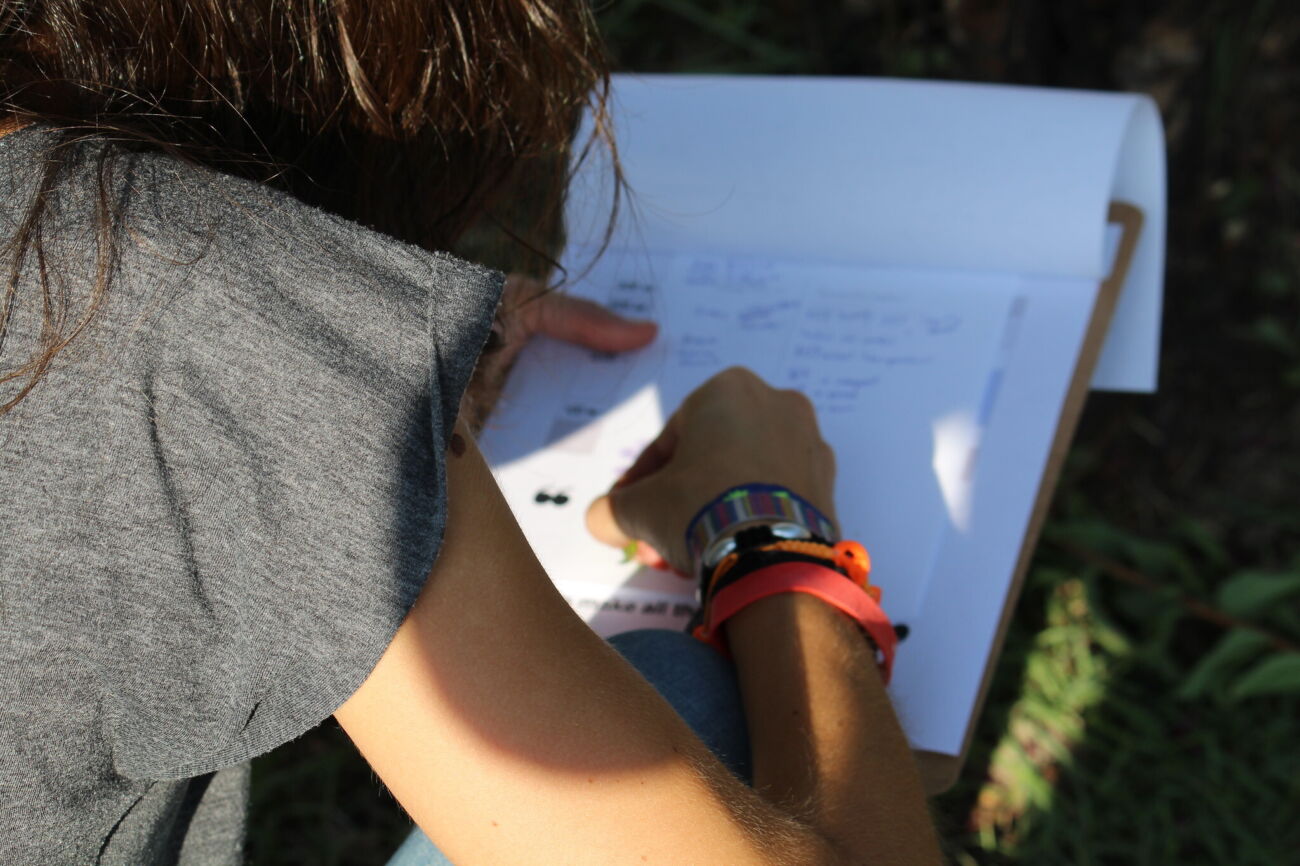
While studying ecosystems, plant and animal adaptations, and biomimicry with her third-grade students at Dayton Heights Elementary School in Los Angeles, Amanda took learning beyond the classroom and into the school's gardens and outdoor spaces. There, students observed living organisms, collected data, and made real-world connections between the science concepts they were studying and the environment around them.
What followed was more than a successful lesson.
Students became deeply engaged in the learning process. They asked questions, shared observations, and explored how nature itself can inspire solutions to real-world challenges through biomimicry.
"It was truly rewarding to watch them take ownership of their observations and discussions."
That experience didn't just shape student learning. It also changed the way Amanda approached her own teaching. Throughout the year, Amanda worked alongside Out Teach instructional coach Jim, using coaching and ready-to-use instructional resources to design lessons that were increasingly student-centered, inquiry-based, and hands-on.
"Out Teach coaching has greatly supported my growth as an educator by helping me design lessons that are more student-centered, inquiry-based, and engaging," she says. "Through coaching, I have become more intentional about incorporating hands-on investigations and encouraging students to ask questions, think critically, and make sense of their learning through discussion and exploration."
Just as importantly, the coaching helped Amanda feel more confident using outdoor spaces as meaningful extensions of her classroom.
"The coaching also helped build my confidence in taking instruction outdoors regularly and using outdoor spaces as meaningful extensions of the classroom," she says.
As Amanda's confidence grew, so did her students'.
Hands-on investigations became opportunities for students to practice observing closely, collecting evidence, asking thoughtful questions, and making sense of the world around them. Along the way, Amanda noticed something even more meaningful taking shape.
"It has added another layer of depth to student learning where they can see themselves as changemakers not only in their school environment but also in their communities and beyond."
For Amanda, that's one of the most rewarding outcomes of outdoor learning. Students aren't simply learning science concepts. They're developing the confidence to explore, question, and recognize that their ideas and actions can make a difference. Looking back on the year, Amanda also has encouragement for educators who may be thinking about spending more time learning outdoors.
"Start small and give yourself permission to learn alongside your students," she says. "Outdoor, inquiry-based instruction does not have to be perfect to be meaningful. Even simple observations, discussions, or short investigations outside can spark curiosity and engagement."
Whether it's a 15-minute nature walk or a full lesson outdoors, Amanda encourages teachers to make space for outdoor learning regularly, embrace student questions, and allow curiosity to guide the experience.
She leaves fellow educators with one final thought:
"Just as plants need sunlight, water, and care to grow strong in nature, students need encouragement, guidance, and opportunities to learn for their minds to grow and flourish too."
It's a reminder that some of the most meaningful learning begins with a simple observation, a thoughtful question, and a teacher willing to create space for discovery.
Could This Happen at Your School?
Every year, Out Teach partners with educators like Amanda to bring hands-on science learning to life through instructional coaching, ready-to-use lessons, and thoughtfully designed outdoor learning spaces. Out Teach currently partners with schools and districts in Alabama, California, Colorado, Georgia, Maryland, North Carolina, Texas, Virginia, Washington, and Washington, DC.
If you're interested in exploring what a partnership could look like for your school or district, we'd love to connect.
If your school or district is located outside these areas, we'd still love to hear from you. Contact Scott Feille (sfeille@out-teach.org) to begin the conversation.